
Find an expert in language stimulation for children with Margot
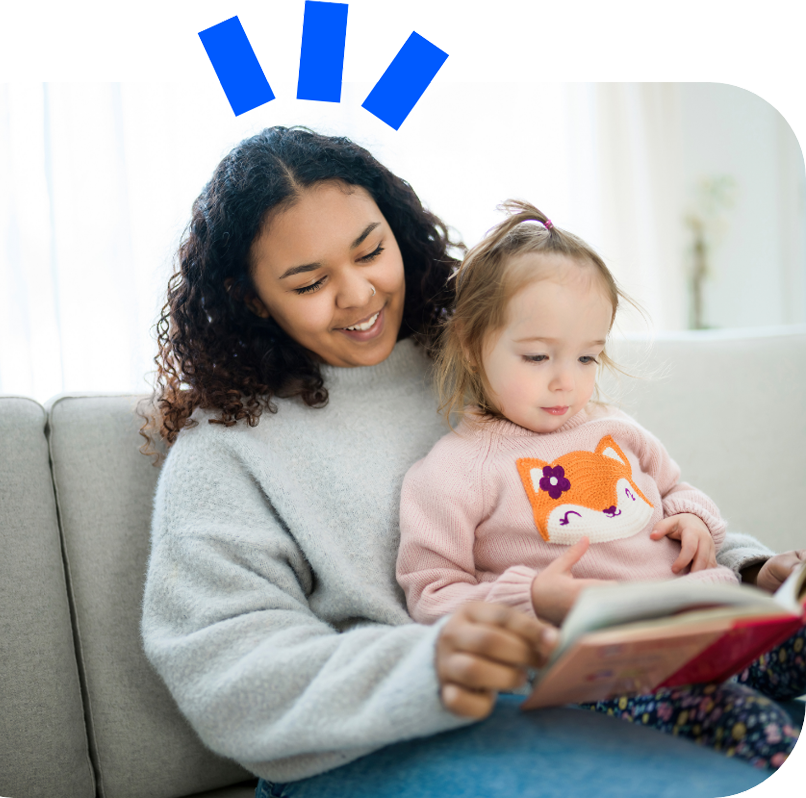
Find an expert in language stimulation for children with Margot
Finding an expert in language stimulation for children often means seeking a breath of fresh air on days when communication seems blocked. When a child struggles to express themselves, find the right words, understand instructions, or make themselves heard, parents feel a mixture of concern and hope. You want to help them, but you don’t always know how. And you need a professional who can intervene gently, expertly, and humorously—so that your child can progress at their own pace, without pressure.
At Margot, we understand that every little bit of progress counts. Founded by Chantale Alvaer, an education entrepreneur and teacher, Margot verifies 100% of its experts before publication. That’s why we help you find a verified, qualified, caring language stimulation expert for children who is suited to your family’s situation.
- 128 verified language stimulation experts for children
- Average response time: 24-48 hours
- Family satisfaction rate: 97%
How can I find a speech therapy expert for children on Margot?
Finding a professional should be simple, personal, and reassuring. Here’s how Margot makes it easy for you.
Create your family account
In just a few minutes, you can create your profile and indicate your child’s needs: age, observed difficulties, desired goals, current routines, languages spoken, family context. The more accurate your information is, the more suited the experts suggested will be to your child’s situation.
Post your ad
Describe your situation with specific examples: words that are difficult to pronounce, misunderstood instructions, lack of words, absence of sentences, pronunciation, social difficulties, or suspected delays.
Your ad remains private and is only visible to verified experts in language stimulation for children.
Conduct interview
Thanks to secure messaging that complies with Law 25, you can communicate directly with professionals.
You can ask questions, request a virtual meeting, and evaluate their approach, gentleness, teaching style, and ability to work with your child.
Most families receive three or more applications within 24 hours.
Hire with confidence
Once you have made your choice, agree on a schedule, a location (at home or online), realistic goals, and an action plan.
You pay the expert directly according to your agreement—no Margot commission.
Why choose Margot to find an expert in language stimulation for children?
Our specialists are not amateur improvisers. They are trained professionals—in special education, speech therapy (without making diagnoses), early intervention, or languages—who can help your child develop their language skills, confidence, and enjoyment of communication.

A comprehensive verification process
Every child language stimulation expert registered on Margot undergoes:
- Identity verification based on Canadian documents
- Authorization to work in Canada
- The necessary training depending on the type of service offered (intervention, early childhood, communication)
Unlike generalist platforms, where checks are optional, at Margot they are 100% mandatory before a profile is published. Our criteria eliminate 23% of applications. Unlike SOSgarde (optional checks) or Care.com (extra charge), at Margot it is mandatory and included.

A tailor-made connection
Your personalized ad attracts specialists who truly match your child’s needs.
At the same time, browse profiles in your area according to your criteria: child’s age, language challenges, experience, languages spoken, approaches used (play, routines, targeted stimulation).
This dual approach saves you time and increases your chances of finding the ideal child language stimulation expert who will fit naturally into your family life.

A community that supports you
Margot is not just a classifieds site.
It is a supportive ecosystem where you benefit from responsive customer service, secure messaging that complies with Bill 25, and an environment designed to facilitate communication between families and professionals.
You remain in control of your search, knowing that you can count on us.

A professional and human approach
Unlike generalist platforms, we specialize in qualified educational and family services in Quebec, tailored to the realities of children and their parents.
Our experts in language stimulation for children work gently, professionally, and kindly to support your child’s language development.
Find a language stimulation expert for children based on your situation
Every child progresses differently. Here are some situations where language stimulation becomes an essential support.

Your child speaks little or is late to speak
He uses few words, points more than he speaks, or expresses himself mainly through sounds.
An expert in language stimulation for children is helping him structure his first words and develop communication skills.

Your child has difficulty understanding instructions.
Routines become complicated. Instructions must be repeated.
The expert helps the child strengthen their verbal comprehension, a key factor in academic success.
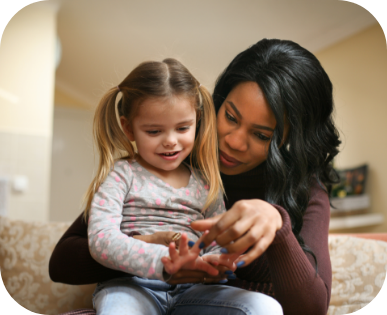
Your child has difficulty pronouncing certain sounds
He slurs his words, replaces certain sounds, and makes his sentences difficult to understand.
Targeted stimulation helps improve articulation without pressure.
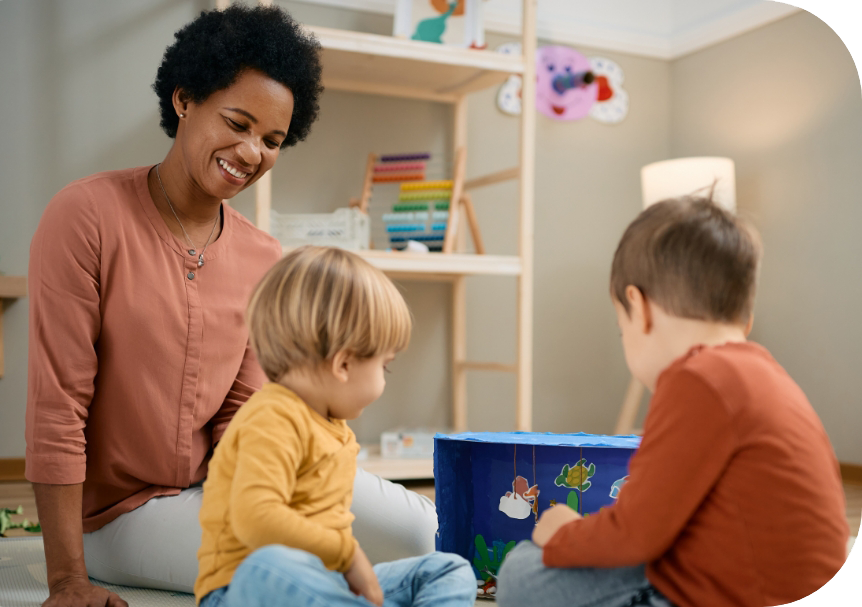
Your child has a language delay
Whether it’s a simple delay, a bilingual environment, or atypical development, a child language stimulation expert offers tailored strategies.
Your child needs support before starting school
A little help before kindergarten can make a big difference.
Experts prepare children with stimulating games, activities, and interactions.
Our language stimulation services for children

Language stimulation at home in Quebec
Sessions take place in your home, in your child’s familiar environment, to maximize their participation and progress.
- Average session length: 45 to 60 minutes
- Activities used: symbolic games, language routines, fun exercises, and facilitating gestures
- Profiles supported: children aged 12 months to 12 years
- Common challenges: language delay, pronunciation, limited vocabulary, comprehension
- Recommended notice period for booking: 48 to 72 hours

Online language stimulation
Virtual sessions allow you to support your child even from a distance, thanks to an interactive approach tailored to their attention span.
This service is ideal for families who live far away, people with unusual schedules, or to ensure continuity when travel is not possible. Experts use visual tools, online games, and tailored materials to provide high-quality support.

Language support integrated into daily routines
Some experts can guide you in incorporating simple strategies at key moments: mealtimes, dressing, bath time, transitions, or free play.
This service helps parents create a naturally language-rich environment, promoting progress between formal sessions.
Our related services
Qualified nannies
To support daily routines and spontaneously encourage language development in a natural context.
Occasional babysitters
To offer a gentle, attentive presence that encourages spontaneous language development at key moments throughout the day.
Daycare replacement
For educational settings that wish to enrich verbal interactions and promote communication within their groups.
Regions and cities served by Margot
Margot covers all of Quebec:
- MONTREAL : Westmount, NDG, Côte-des-Neiges, Pointe-Claire, Beaconsfield, Plateau Mont Royal, Outremont, Verdun, Ile-des-Sœurs, and other neighborhoods in Montreal.
- NORTH SHORE : Laval, Blainville, Boisbriand, Sainte-Thérèse, Mirabel, Saint-Jérôme, Repentigny, Terrebonne, and surrounding areas.
- SOUTH SHORE : Brossard, Longueuil, Saint-Hubert, Boucherville, Saint-Lambert, Chambly, Drummondville (Centre-du-Québec), and surrounding areas.
- NATIONAL CAPITAL (Quebec City area) : Quebec City, Lévis, Sainte-Foy, Charlesbourg, Beauport, Saint-Nicolas, and surrounding areas.
- ESTRIE : Sherbrooke, Magog, Granby, Bromont, Cowansville, and surrounding areas.
- MAURICIE : Trois-Rivières, Shawinigan, Louiseville, Nicolet, and the surrounding areas.
- LAURENTIDES : Saint-Jérôme, Blainville, Sainte-Thérèse, Saint-Eustache, Mirabel, Sainte-Agathe, and surrounding areas.
- LANAUDIÈRE : Terrebonne, Repentigny, Mascouche, L’Assomption, Joliette, and surrounding areas.
- OUTAOUAIS : Gatineau, Aylmer, Hull, Buckingham, Chelsea, Ottawa (Ontario), and surrounding areas.
- BAS-SAINT-LAURENT : Rimouski, Rivière-du-Loup, Mont-Joli, Montmagny, and surrounding areas.
- SAGUENAY–LAC-SAINT-JEAN : Saguenay (Chicoutimi, Jonquière), Alma, Roberval, Dolbeau-Mistassini, and surrounding areas.
What families say


“We knew our son needed a little help, but we didn’t know how to go about it. The counselor we found on Margot took the time to listen to us and show us some small, practical steps we could incorporate into our routines. Nothing spectacular… just tools that really work. It changed the atmosphere in our home.”
Sophie et Marc / Montréal

“Our daughter would shut down when asked to speak. With the language stimulation expert, she felt respected and never rushed. Little by little, her eyes lit up and she began to participate again. It’s not perfect, but we can see that she feels more confident, and that’s already a huge step forward.”
Mélanie / Québec

“What touched us most was how the specialist included the whole family. He explained clearly what was happening, without jargon or judgment. We’re taking small steps, but for the first time, we have a roadmap. It feels good.”
Amélie et Patrick / Laval
FAQ – Everything you need to know about finding a language stimulation expert for children with Margot
Who can offer language stimulation for children on Margot?
The language stimulation experts featured on Margot are professionals trained in communication, special education, early childhood, or early intervention. Unlike generalist platforms where anyone can sign up, our experts have hands-on experience working with children who have language delays, pronunciation difficulties, limited vocabulary, or comprehension challenges.
Minimum training required:
- Associate’s degree in special education, early childhood education, or equivalent
- OR university certificate in early intervention/language
- OR 3+ years of documented experience in language stimulation
What a Margot expert DOES NOT DO:
- Make diagnoses (language disorders, dysphasia, ASD)
- Replace speech therapists for formal evaluations
- Promise “cures” or unrealistic timelines
How does Margot verify experts before listing them?
Verification is our cornerstone. Chantale Alvaer, founder of Margot and founder of a renowned education company, has developed a four-step process based on 20 years of experience working with Quebec families.
Margot verification process (mandatory, not optional):
Step 1 — Canadian identity Validation of government ID (driver’s license, health card, passport). Photo verification: profile match.
Step 2 — Right to work Confirmation of Canadian citizenship or valid work permit.
Step 3 — Relevant training Diplomas verified with institutions (DEC, AEC, certificates).
Result: You never have to wonder, “Is this person qualified?” We’ve already confirmed it.
Which children benefit from language stimulation?
Language stimulation for children is ideal for families who observe a delay, difficulty, or increased need for support in language development. It is intended for:
- Toddlers aged 12 to 36 months who speak little or late
- Children who mispronounce certain sounds
- Children who have difficulty understanding instructions
- Children who are shy, anxious, or selective in their communication
- Children with limited vocabulary
- Elementary school students with persistent challenges
The goal is always the same: to support harmonious language development through simple, fun, and consistent strategies.
In short: any child who could benefit from a little help with language can be supported on Margot.
What is the difference between speech therapy and speech-language pathology?
This is THE key question for making the right choice.
Language stimulation (what our Margot experts do):
- Objective: Encourage natural development through fun activities
- Who: Qualified education/communication professionals (non-clinicians)
- Methods: Games, family routines, modeling, repetition, facilitating gestures
- Setting: At home or online, relaxed atmosphere
- When: Prevention, mild delays, support between speech therapy sessions
Speech therapy (regulated clinical service):
- Objective: Diagnose and treat language disorders
- Who: Speech therapist who is a member of the OOAQ (professional order)
- Methods: Formal assessments, standardized tests, clinical intervention plans
- Setting: Private clinic or CLSC, structured therapeutic approach
- When: Identified disorders (dysphasia, stuttering, phonological disorders)
Language stimulation helps because it:
✓ Supports progress between speech therapy sessions (continuity)
✓ Reinforces daily learning in a natural environment
✓ Provides concrete strategies for parents (family empowerment)
✓ Reduces waiting times (6-18 months for public speech therapists in Quebec)
✓ Costs 30-50% less than private speech therapy
Field data: Among the families we follow, 38% consulted a speech therapist after stimulation, while 62% would have consulted without prior intervention, suggesting that early stimulation can resolve certain simple delays.
In short: Stimulation prepares, accompanies, or complements speech therapy, but it never replaces it for diagnosed disorders.
Where do the language stimulation sessions take place?
Sessions can be offered:
- At home, in the child’s safe environment
- Online, using a perfectly adapted visual and interactive approach
- In a family or school setting, depending on your circumstances
Language stimulation for children works particularly well online, as experts use digital games, visual aids, and interactive routines designed to capture attention.
In short: no matter where you are, your child will benefit from consistent, tailored, and structured intervention.
How does a language stimulation session for children work?
A typical session lasts 45-60 minutes and follows a proven structure to maximize engagement and progress:
- Welcome and observation (5-10 min) The expert observes: the child’s mood, attentional availability, spontaneous language used in free play, parent-child interactions.
- Examples of activities targeted according to objectives (25-35 minutes)
For 12-36 months:
- Repetitive picture books (encourages verbal imitation)
- Sensory games with commentary (“Touch the soft sand!”)
- Nursery rhymes with gestures (audio-motor coordination)
- Bubbles, balloons (motivation to vocalize in order to obtain)
For ages 3-5:
- Symbolic games (cooking, doctor) with expert narration
- Puzzles/building blocks with sentence modeling (“I’m putting the red piece in”)
- Storybooks with open-ended questions
- Simple social games (hide-and-seek, riddles)
For ages 5-12:
- Turn-taking board games (articulation + pragmatics)
- Sequential storytelling
Sound/rhyme games (phonological awareness) - Guided thematic conversations
- Examples of scaffolding strategies used continuously:
- Extension: Child says “car” → Expert adds “Yes, a big red car!”
- Rephrasing: Child says “Me want that” → Expert models “I want the truck.”
- Spaced repetition: A word is repeated 5 to 7 times in a session.
- Pausing: The expert waits 3 to 5 seconds to let the child initiate
facilitating gestures. - Makaton, pointing, and exaggerated articulation are part of this.
- Parent feedback (5-10 min)
- Summary of progress observed today
2-3 simple strategies to replicate at home - Suggestions for reading/games for the week
- Adjustments to objectives if necessary
Optimal frequency observed:
- Mild delays: 1×/week = progress in 8-12 weeks
- Moderate delays: 2×/week = progress in 6-10 weeks
- Maintaining progress: 1×/2 weeks after intensive phase
Margot data: 73% of families observe the first new words/sounds within the first 4 sessions (self-reported, non-clinical).
How long does it take to find a speech therapist for children?
Responses are usually quick, as experts receive your ad immediately in their dashboard.
What we’ve observed:
- 78% of families receive two applications within 48 hours
- The first responses often arrive within 3 to 5 hours
- The more detailed your description of your child, the more relevant the applications will be
This speed transforms the experience of families who need to find a speech therapy expert for children as quickly as possible.
In short: the majority of families find an expert within 48 hours.
How much does a speech therapist for children cost? Typical rates in Quebec:
Typical rates in Quebec:
Montreal/Laval/South Shore:
- Beginner (1-2 years of experience): $50-60/session
- Experienced (3-5 years): $55-70/session
- Senior expert (5+ years and certifications): $60 to $80 per session
Regions (Quebec City, Sherbrooke, Gatineau, Trois-Rivières):
- Generally $5-$10 less per category
Online sessions:
- Approximately 10-15% less (no travel)
What you pay for:
✓ Verified professional expertise
✓ Appropriate equipment provided by the expert
✓ Personalized follow-up and ongoing adjustments
✓ Parent communication between sessions (short messages)
What’s included in the Margot subscription:
✓ Unlimited access to verified profiles
✓ Secure messaging
✓ Customer support if you have any issues with an expert
✓ Monthly webinars on child development and other topics
Margot family subscription: $29.99/month — You pay the expert directly according to your agreement.
Margot does not take any commission on sessions.
Informative comparison:
- Private speech therapist: $90–130/session (same duration)
- Margot stimulation expert: $55–80/session
- Savings: 30–50% for tailored non-clinical interventions
How long before we see progress?
Data observed in Margot families:
First visible signs:
- 2-4 weeks: New sounds attempted, improved listening, increased eye contact
- 4-6 weeks: 3-5 new words emerging, attempts at 2-word sentences
- 8-12 weeks: Expanded vocabulary (15-25 new words), improved understanding of instructions
Consolidated progress (typical duration of support):
- Mild delays (12-24 months): 3-4 months (12-16 sessions)
- Moderate delays (2-4 years): 5-7 months (20-28 sessions)
- Preschool support (4-5 years): 2-3 months (8-12 intensive sessions)
- Maintaining primary school skills: 6-10 sessions spread over the school year
Variables that accelerate progress:
✓ Frequency: 2×/week > 1×/week (30-40% faster progress)
✓ Parental practice: Families applying strategies daily progress 2× faster
✓ Optimal age: 18-36 months = maximum brain plasticity
✓ Linguistic context: Monolingual children progress slightly faster initially (but bilingual children catch up)
✓ Regularity: Breaks >3 weeks slow down consolidation
Factors that slow down progress (situations requiring patience):
- Undiagnosed associated disorders (ASD, disability, neurological disorders)
- Highly stressful family environment (moving, separation, illness)
- Very shy/anxious children (require 3-5 sessions to warm up)
- Simultaneous bilingualism with delays in both languages
Important realism: This data is self-reported by families and does not constitute clinical assessments. Each child progresses at their own pace.
My child is growing up in a bilingual environment. How do I choose the right expert?
Simultaneous bilingualism is common in Quebec (French-English, French-Arabic, French-Spanish). This reality influences language development and should be taken into account when searching for an expert.
What you need to know about bilingualism and development:
Typical bilingual development:
- Total combined vocabulary comparable to monolinguals (50 words at 24 months = 25 French + 25 English)
- Normal mixing of languages until age 4-5 (“I want milk,” “Look at the dog”)
- Slight temporary confusion between systems (sounds, grammar)
- No cause for concern if: The child understands both languages and communicates in at least one
When to seek advice in a bilingual context:
- Delay in BOTH languages (poor vocabulary in both)
- Limited comprehension in the dominant language at home
- Refusal to speak in one of the languages (anxious selectivity)
- Family concerned that bilingualism is “complicating” development
Questions to ask experts during the interview:
- What is your experience with bilingual children? Look for: Number of bilingual children supported, languages involved, results observed.
- Do you work in one language or both? Possible options according to the expert:
- Intervention in French only (reinforces the structure of one language)
- Alternating bilingual intervention (if the expert is fluent in both)
- Parental coaching on strategies applicable in all languages
- How do you manage the mixing of languages? Some experts accept/encourage it, others prefer a clear separation. There is no “right” approach—choose the one that fits your family philosophy.
- Which language should be targeted first? Ask for advice based on your specific situation: future school language, language or more significant delay, family context.
What Margot offers bilingual families:
Search filter:
- Languages spoken by the expert (42% of our language stimulation experts are fluent in French and English)
- Specific experience with bilingualism mentioned in profiles
- Option to specify your linguistic context in your ad
Information to include in your ad:
- Languages spoken at home
- Language(s) in which you observe a delay
Your expectations (intervention in one language vs. bilingual) - Planned language of schooling
Bilingual context data (self-reported by families):
- Bilingualism progress timeframe: generally ~15-20% longer than for monolinguals (two language systems)
- Specialists with experience in bilingualism represent 42% of language stimulation profiles.
- After support, bilingual families report similar satisfaction to monolingual families (96% vs. 97%)

External resources
reliable:
- CIUSS – Learning to speak multiple languages: debunking the myths
- Quebec Order of Speech-Language Pathologists and Audiologists (OOAQ)
What you control: Choose the expert whose approach and experience match your family’s situation. Margot gives you access to profiles, and you decide who is the best fit.
In short: Specify your bilingual context in your ad and ask candidates direct questions. Experienced experts will be able to guide you according to your unique situation.
Verified additional resources
- Language development ages 0-6 — CHU Sainte-Justine
- Quebec Order of Speech-Language Pathologists and Audiologists (OOAQ)
- Stimulating language at home: activities with your child – CIUSSS

Join Margot's community today!

Quick registration
Verified profiles
Secure messaging